IR Turret
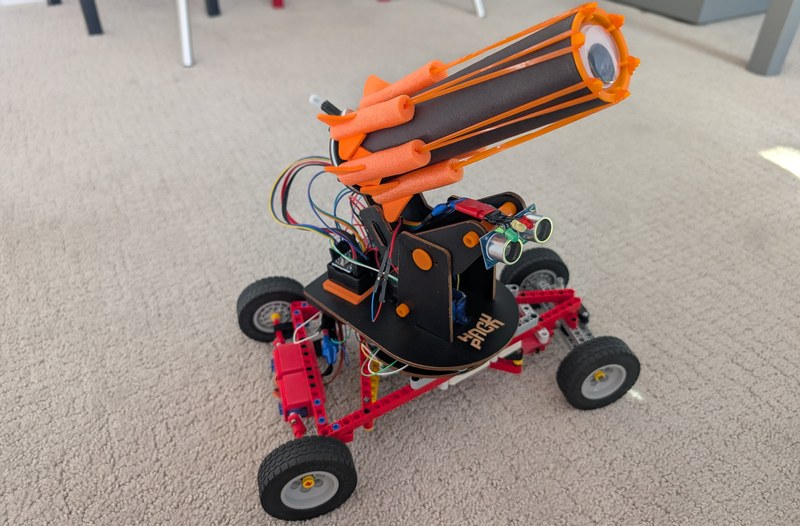
This was originally a Hack Pack foam-rocket-shooting IR-controlled turret — the first robot I built that used an Arduino controller. After assembling it, I started customizing the program and added a feature that lets me lock the turret with a remote controller and a PIN code. Then I noticed that it still had some extra pins available, and I wondered what else I could add. And that is where I went off the rails!
The first thing I thought of was adding some LEDs, and guess what? My LED got deep-fried with lots of visible smoke! Note to future self: always check the voltage. After learning what a resistor is and doing some wiring work, I got three LEDs — red, yellow, and green — showing the current state of the robot.
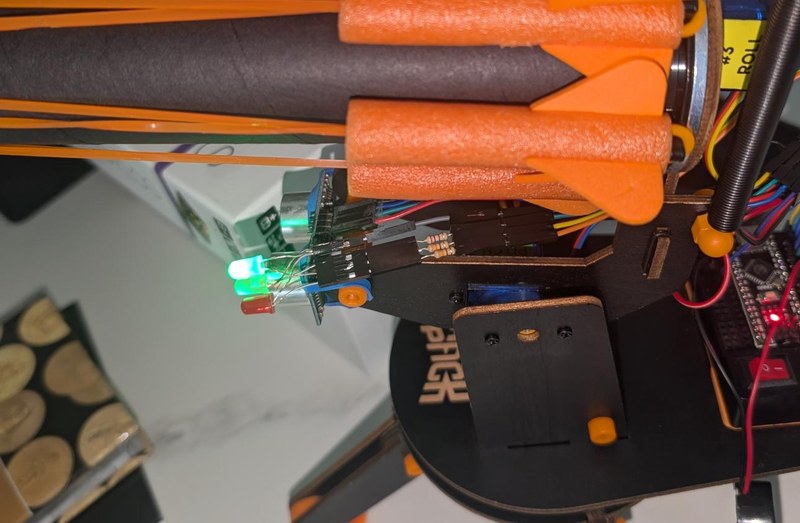
Then I realized that if someone busted into my bedroom trying to steal my sweets, this thing would not even care. So I gave it an ultrasonic sensor that can automatically fire foam rockets at anyone foolish enough to rob my candy stash while the system is armed.
This was not enough, so I added a laser diode (the same kind used in laser pointers), which can automatically turn on to scare intruders even without firing foam rockets.
But how effective is a defense system if it cannot even move? Because of this, I decided to make it into a driving IR turret that could chase the culprit. I reused my old LEGO Technic parts to create a four-wheeled drivetrain. The steering was challenging because I did not have any good gears, so I ended up making a gearless steering system. I will explain how that works in another blog post.
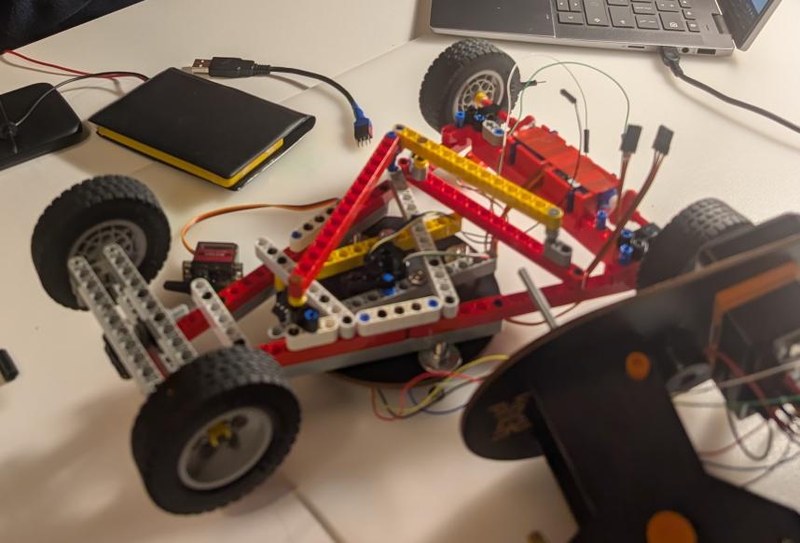
Because I used custom motors, it was hard to connect them to my LEGO Technic beams, so I had to design my own casings in Tinkercad to make the connection easier. Then I printed them with my ToyBox 3D printer. You can see them as red boxes next to the rear wheels. Note to future self: I have a 3D printer, why bother with LEGO Technic at all???
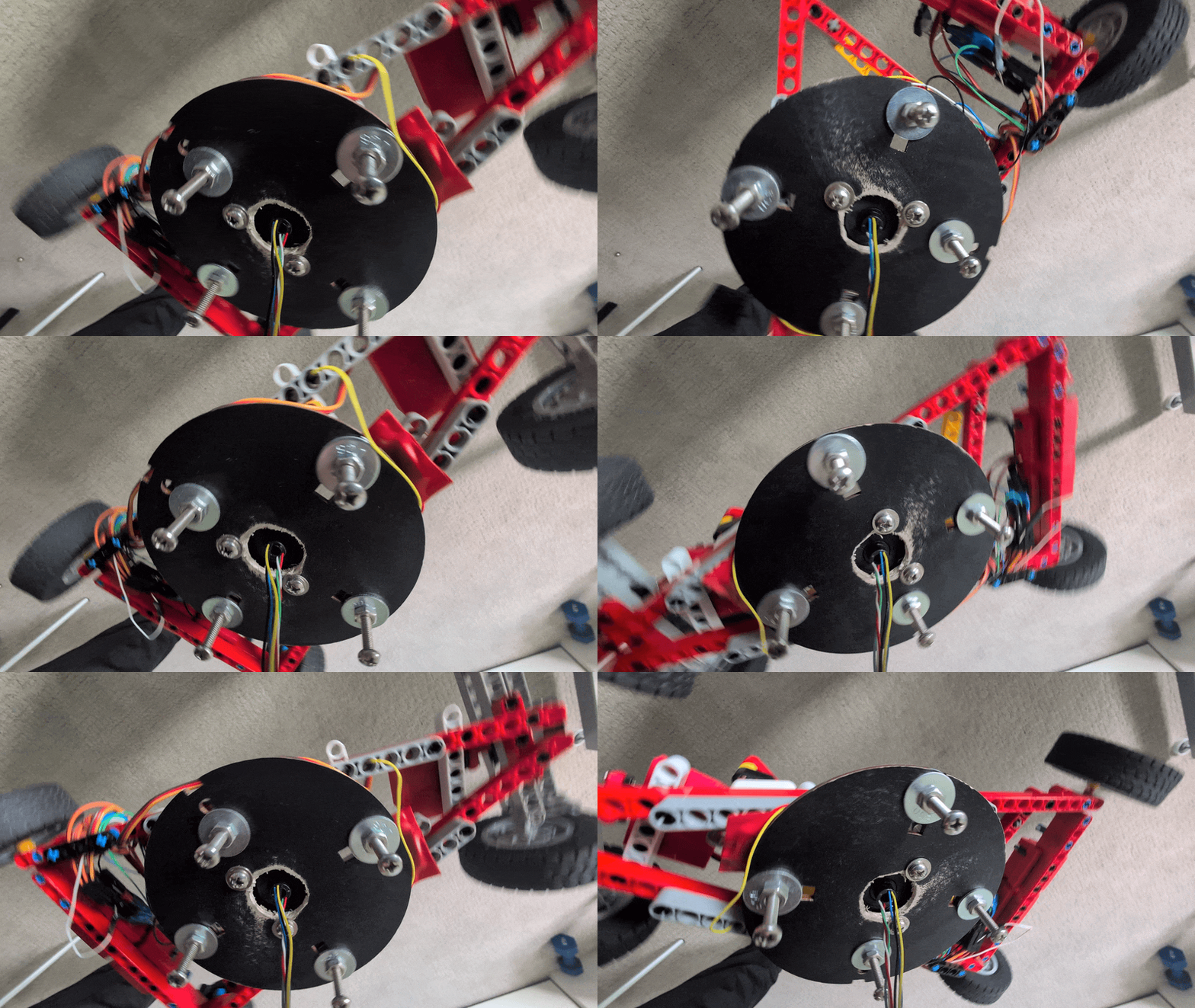
The original IR turret had a limited yaw rotation range, and I wanted to fix that. But there was a problem: how can you have a continuously rotating part without tangling all the wires? Say “Hi” to the slip ring!
This was a really fun project. Looking back, I did a lot of things wrong. First of all, I used very cheap and fragile motors with plastic gears, which I later had to replace with metal ones. The drivetrain platform was also unstable and took up a lot of space. Even so, I learned a lot from building this robot.
Another note to future self: don’t make more squishy builds!